
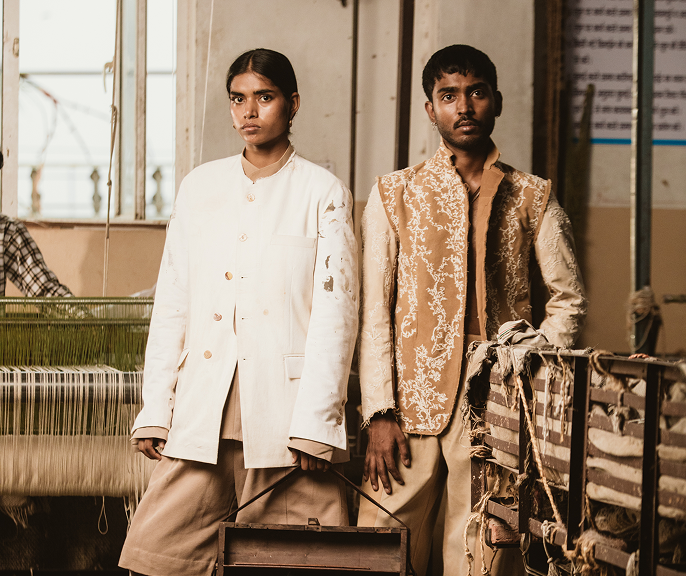
From artisanal streetwear to architectural minimalism, these designers are proving that the future of the industry is no longer centered in the West.
For decades, India’s relationship with the global fashion industry was defined by an invisible hand. As the silent partner to the world’s most prestigious houses, India’s artisans have long set the standard for material excellence and hand-wrought beauty.
Today, that relationship has evolved into a vibrant creative dialogue. A new generation of visionaries is stepping into the spotlight, moving India from the master ateliers to the creative vanguard. These designers are translating age-old heritage into a sophisticated, modern language of architectural rigor and contemporary cool.
From the multidisciplinary ateliers bridging craft and high art to the labels deconstructing streetwear through an archival lens, these ten designers are redefining what it means to be a global brand from India.
Kartik Research
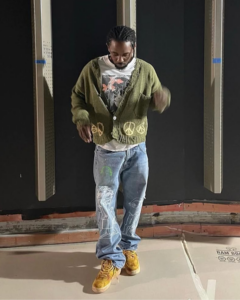
For Kartik Kumra, the sole purpose of creating Kartik Research (formerly Karu Research) was to make Indian craftsmanship cool again. With no formal training in design, Kumra is now a regular fixture on Paris Fashion Week calendar, having recently shown his critically acclaimed collection, ‘Raag’ which had the whole internet abuzz. From Kantha embroidery to Rajasthani block prints, Kumra’s clothes have found fans in F1 legend Lewis Hamilton and even rapper Kendrick Lamar. Currently shortlisted for the LVMH Prize for Young Fashion Designers, winning it could mean even more recognition for the young designer who has already made his mark in the industry in a big way.
Dhruv Kapoor
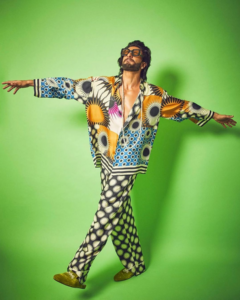
Dhruv Kapoor is the man who brought Indian maximalism to the Milan Fashion Week schedule. His designs are a fever dream of clashing prints, oversized silhouettes, and a gender-fluid sensibility that defies South Asian stereotypes.
For his A/W 2026 show in Milan, the designer turned to everyday juxtapositions and transit spaces, where, for a fleeting moment, everyone is grounded. Imperfections and lived-in style served as a major inspiration for Kapoor, whose clothes have been worn by the likes of Alia Bhatt, Rita Ora, Ranveer Singh, and more.
Bodice
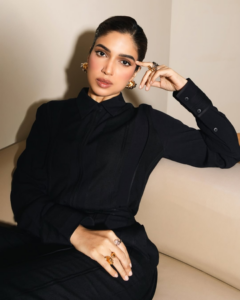
Ruchika Sachdeva’s Bodice is the antithesis of the glitzy India trope. Winning the prestigious International Woolmark Prize in 2018, Bodice focuses on structural integrity, pleating techniques, and locally sourced wools. The brand’s aesthetic is intellectual and understated. It appeals to the global professional woman who values the “quiet luxury” of a well-engineered garment. Her designs’ minimalist and lived-in appeal is India’s answer to the Scandinavian fashion movement. Sachdeva describes the brand’s aesthetic in the best way: “Bodice balances artisanal craftsmanship with a pared-back aesthetic, always finding that perfect balance between being too much and too little. Our pieces are designed for a woman who values subtlety, attention to detail, and a lasting connection with her clothes.”
Rkive City
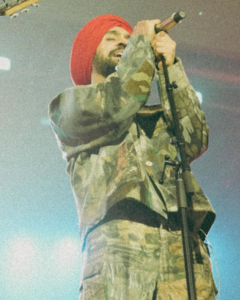
By focusing on modularity and the longevity of garments, Ritwik Khanna’s Rkive City is positioning Indian fashion at the forefront of the global sustainability conversation. The brand’s philosophy hinges on three pillars: re-wear, repair, and reconstruction. These played a big role in the brand’s recent showcase at Khanna’s alma mater, the famed Mayo College, a boarding school in Ajmer, where a portion of the collection was made using upcycled material from old school uniforms, which gave the collection a lived-in and preppy vibe. Taking his love for sustainability and circularity to the global stage, Rkive City is quickly becoming a name to be reckoned with.
Verandah
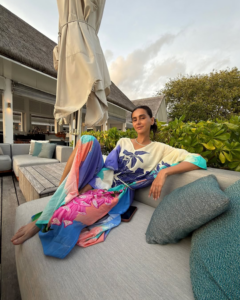
Anjali Patel Mehta’s Verandah is the quintessential resort wear label for the jetsetter. So much, in fact, that it made its way to the second season of White Lotus, the quintessential vacation-based dark comedy. Focusing on sustainable fabrics and hand-painted prints inspired by the Indian landscape, the brand has become a staple for people who love vibrancy and a tropical state of mind. Launched with a vision to create joyful, conscious luxury, the brand has transcended its Mumbai origins to become a mainstay at some of the most premier holiday destinations.
Almost Gods
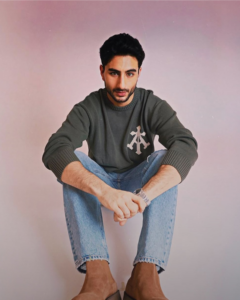
Dhruv Khurana’s Almost Gods is less a fashion brand and more a socio-cultural movement. Drawing heavily from Indian mythology and architectural history, the brand produces streetwear that is a modern interpretation of the past. Their flagship store in Delhi is a brutalist masterpiece, and their designs have been spotted on global hip-hop artists. At the heart of Almost Gods is the concept of “non-linear time.” Rather than indulging in nostalgia or simple revivalism, the brand treats the past and future as existing on a single plane. Every garment is approached as an artifact imbued with symbolic weight, where imperfections are welcomed as evidence of life.
Chorus
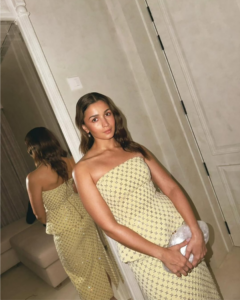
A multidisciplinary atelier run by the inimitable Karishma Swali of the Chanakya School of Art fame, Chorus, formerly known as moonray, defies the traditional boundaries of a fashion house. Emerging from the formidable four-decade legacy of Chanakya International, Chorus is shaped by the principles of cultural continuity and material intelligence. It functions as a living system where archival knowledge from generations of artisans is integrated with progressive, contemporary intent. From the usage of rare textiles to employing craft techniques that are incredibly delicate, Chorus’ commitment to craft can be attributed to the Chanakya School of Art’s long-standing relationship with the most famous luxury maisons globally, having served as their crafts partners for decades.
Hemant & Nandita

Hemant Lalwani and Nandita Raipurani have mastered the art of the bohemian rhapsody, blending Indian craftsmanship with a contemporary, wearable silhouette that has taken the US contemporary market by storm. Their designs evoke a sense of global wanderlust, making them a “must-have” for the modern international wardrobe.
Rococo Sand
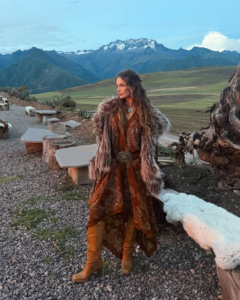
Also, by Hemant and Nandita, Rococo Sand captures high-octane energy through an Indian lens. Known for daring cuts and eclectic prints, the brand is a top seller globally. It successfully translates the vibrancy of Indian festivals into a format that resonates with a global audience looking for bold, vacation-ready style.